
Phalaenopsis 2 stems
- and we'll find out the delivery cost
- 1 person added the item to their collections
- You will get 0.87 bonuses
Watering frequency
1 times per week
Size
- Width - 25 cm
- Height - 70 cm
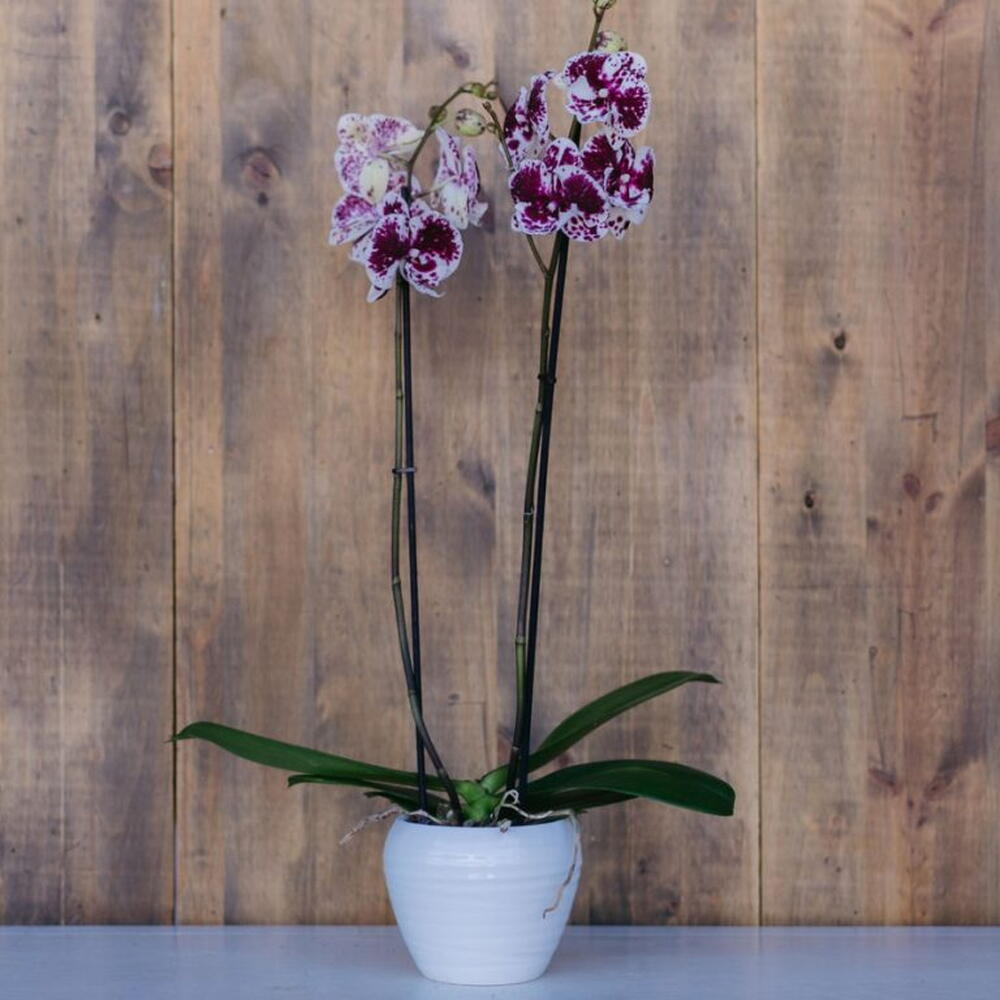
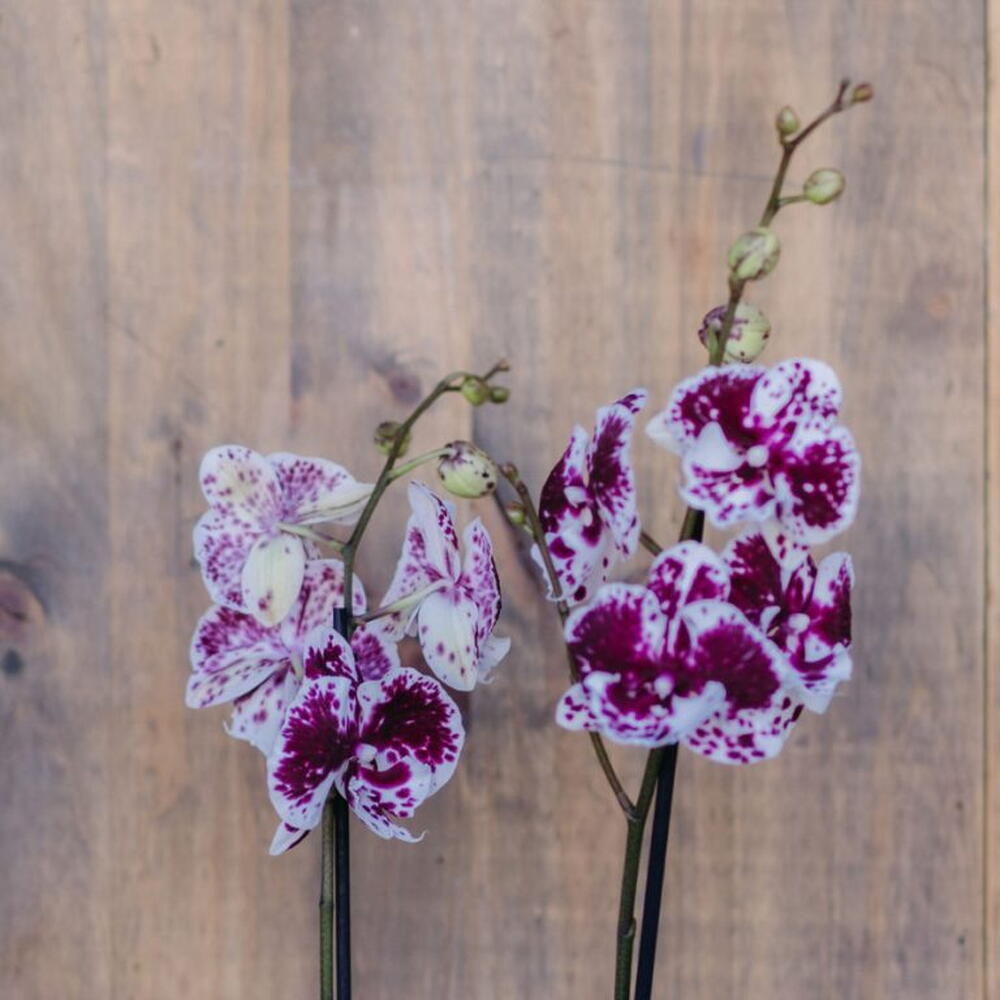


Phalaenopsis, also known as moth orchids, are some of the most popular orchids due to their beauty and ease of care. They are native to Southeast Asia and are characterized by their large, showy flowers, which can range in color from white, pink, purple and yellow to more exotic shades. Decorative pot not included
Care Guide
Phalaenopsis Care Light: Phalaenopsis orchids need bright, indirect light. Direct sunlight can burn the leaves, so it's important to avoid it. An ideal spot would be near a window with sheer curtains or somewhere that receives filtered light for several hours a day. If the leaves turn yellow, they may be getting too much light. If the leaves become very dark or green, they may not be getting enough light. Temperature: Phalaenopsis orchids prefer warm temperatures, between 18°C and 29°C (64°F and 84°F). They don't like excessive cold, so be sure to keep them away from drafts. Avoid placing the plant in areas where temperatures drop below 10°C (50°F). Watering: Moderate watering is essential. Phalaenopsis orchids are susceptible to root rot if overwatered. Generally, watering once a week is sufficient, but adjust the frequency according to the temperature and humidity. Make sure the potting mix dries out between waterings, but don't let it dry out completely. Use room temperature water, preferably distilled or lime-free, as water with a high mineral content can damage them. Humidity: Phalaenopsis orchids like a humid environment. The ideal humidity is between 50% and 70%. If the air in your home is very dry, especially in winter, you can increase the humidity around the plant by placing a saucer of water and pebbles under the pot (without the base of the pot touching the water). Fertilization: It is recommended to fertilize once a month, using a special orchid fertilizer, or a balanced one with low nitrogen content. During the flowering season, you can slightly increase the fertilizer dosage. Repotting: Phalaenopsis orchids should be repotted every 2 or 3 years, when the roots have filled the entire pot. Repotting should be done in spring, preferably after flowering. Use a well-aerated orchid potting mix, such as pine bark. Avoid damaging the roots when repotting, as they are sensitive.
Phalaenopsis, also known as moth orchids, are some of the most popular orchids due to their beauty and ease of care. They are native to Southeast Asia and are characterized by their large, showy flowers, which can range in color from white, pink, purple and yellow to more exotic shades. Decorative pot not included
Care Guide
Phalaenopsis Care Light: Phalaenopsis orchids need bright, indirect light. Direct sunlight can burn the leaves, so it's important to avoid it. An ideal spot would be near a window with sheer curtains or somewhere that receives filtered light for several hours a day. If the leaves turn yellow, they may be getting too much light. If the leaves become very dark or green, they may not be getting enough light. Temperature: Phalaenopsis orchids prefer warm temperatures, between 18°C and 29°C (64°F and 84°F). They don't like excessive cold, so be sure to keep them away from drafts. Avoid placing the plant in areas where temperatures drop below 10°C (50°F). Watering: Moderate watering is essential. Phalaenopsis orchids are susceptible to root rot if overwatered. Generally, watering once a week is sufficient, but adjust the frequency according to the temperature and humidity. Make sure the potting mix dries out between waterings, but don't let it dry out completely. Use room temperature water, preferably distilled or lime-free, as water with a high mineral content can damage them. Humidity: Phalaenopsis orchids like a humid environment. The ideal humidity is between 50% and 70%. If the air in your home is very dry, especially in winter, you can increase the humidity around the plant by placing a saucer of water and pebbles under the pot (without the base of the pot touching the water). Fertilization: It is recommended to fertilize once a month, using a special orchid fertilizer, or a balanced one with low nitrogen content. During the flowering season, you can slightly increase the fertilizer dosage. Repotting: Phalaenopsis orchids should be repotted every 2 or 3 years, when the roots have filled the entire pot. Repotting should be done in spring, preferably after flowering. Use a well-aerated orchid potting mix, such as pine bark. Avoid damaging the roots when repotting, as they are sensitive.
Part of the text on this page was translated automatically
Ratings and reviews
Sender
March 2026
Sender
March 2026
Clinica Alpha Dent
January 2024 • Google maps review
Super
Translate to English
Alex Chernyak
January 2024 • Google maps review
Very cute flower shop!
Elena Ovchinnikova
October 2025 • Google maps review
Прекрасный магазин, свежие цветы, открытки, предметы декора.
Translate to English
Report Item
Other items of this shop